Tampilkan postingan dengan label Vivaldi Antonio. Tampilkan semua postingan

Vivaldi: String Concertos Vol. 3


Collegium Musicum 90, Simon Standage

“This third volume of Collegium Musicum 90's survey of Vivaldi's string concertos offers a varied selection of works which bears testament to their composer's untiring imagination. Vivaldi composed more than 40 of these sparky little miniatures, united by an (almost) uniform adoption of a three-movement format and by the lack anywhere of any kind of soloist; for this reason they're also sometimes known either as 'concertos for orchestra' or 'ripieno concertos'. None lasts longer than eight minutes, and most come in under five.


CM90 perform with accomplished ease, attempting nothing outrageous but maintaining a relaxed bonhomie and clear-cut eloquence entirely suited to the music's modest aspirations. Theirs isn't the taut Vivaldi sound we have become used to hearing from other ensembles, but they have no difficulty serving up lyrical sweetness or joyous energy as required. Realistically and lucidly recorded, the disc leaves little to be desired.” --Gramophone Classical Music Guide, 2010

Vivaldi, Boccherini: Cello Concertos


Maisky has the distinction of being the only cellist in the world to have studied with both Mstislav Rostropovich and Gregor Piatigorsky. Rostropovich has lauded Mischa Maisky as "... one of the most outstanding talents of the younger generation of cellists. His playing combines poetry and exquisite delicacy with great temperament and brilliant technique."


Vivaldi: String Concertos Vol. 2


'Collegium Musicum 90's stylish performances, distinguished by characterful phrasing and nimble rhythmic vivacity, add the final sheen to this captivating disc.' --BBC Music Magazine ('Pick of the Month', March 2000)

--'Another excellent disc from Collegium Musicum 90' Great entertainment.' --Early Music Review


'…each [of the concertos] has a character that is unfailingly captured by the ensemble. Baroque playing of this calibre may make it difficult to settle for pale imitations elsewhere.'--The Times

'…Collegium Musicum 90 don't resort to fancy effects and tricks… they pick lively tempi, they shape phrases beautifully, they use a wind trio in three of the pieces for variety… and they lend just a hint of flair with little improvised ornaments here and there.' --Early Music Review

Vivaldi: String Concertos Vol. 1


Vivaldi wrote over forty concerti a quattro for strings alone, without a soloist, and the present group were gathered together in a single manuscript, written in the hand of Vivaldi's father, and have been preserved in the Paris Conservatoire library ever since. They are each in three movements, with the central slow movement quite brief and acting as an expressive interlude linking the two vivacious framing allegros. 


The exception is RV 114, which is in two movements, the first moving from a sharply dotted allegro, with a jolly Chaconne to round things off. RV 133 has a striking Rondeau finale, and it is thought that these two works may have been composed separately from the others. They are all freshly inventive and played here with springing rhythms and plenty of vitality. In three concertos, though not specified by the composer, woodwind have been added to give extra colour. The touch of abrasiveness on the string sound is aurally bracing, and the slow movements have a nicely ruminative improvisatory feel. The recording is first class.
--The Penguin Guide to Compact Discs

Programme Music of the Baroque Era


This strikingly innovative disc includes some very rare works resurrected with considerable aplomb here by the indefatigable Nikolaus Harnoncourt. Programme music was something rather new in the baroque era but these five works certainly have a lot of colour and descriptive aspects to them, to say the least.


Farina's "Capriccio Stravagante" dates from the early 17th century and in its 20 minutes traverses a considerable gamut of emotions which make it a very desirable piece, sadly overlooked and quite unknown. Biber and Schmelzer are perhaps more associated with large scale choral works but these instrumental pieces are certainly extremely innovative and Harnoncourt brings out the strong programmatic element extremely well.

Finally we have the great Marin Marais with his astoundingly modern description of the removal of a stone complete with speaker – almost Poulenc like – and Vivaldi's lovely "La Notte" concerto which is an ideally peaceful way to end the disc which at just over 52 minutes is a bit on the short side. Otherwise, this is strongly recommended for those who enjoy the darker side of baroque music. --classical.net, 2008

Vivaldi: Mandolin and Lute Concertos


“highly dramatic performances, deriving their from Guglielmo's ability to harness the propulsive nature of Vivaldi's writing while allowing a great deal of rhythmic flexibility and melodic embellishment...Guglielmo's wonderful cadenza linking the first two movements in RV82 is, like his direction throughout, tasteful and inventive.” --Gramophone Magazine


Vivaldi: Virtuoso Cantatas


“Young French countertenor Philippe Jaroussky… negotiates even the most taxing display pieces with effortless agility. Yet he is more than a mere showman: he shapes the music with subtle nuances and expressive gestures and demonstrates a mature musical sensitivity throughout. There's some bucolic playing, too, from Ensemble Artaserse, captured with resonant detail on this recording.” --BBC Music Magazine, November 2005 ****


“The countertenor Philippe Jaroussky soars as effortlessly as a bird, with no sense of strain: perhaps – for we can never know for certain – this is how the great castrati of the 18th century sounded. He was certainly convincing in the soprano role of Nero in the Euroarts DVD of Handel's Agrippina.

Little is known about the background to these cantatas. Each is in the familiar form of two dacapo arias, separated and sometimes preceded by a recitative. The themes are equally familiar, generally concerned with the inconstancy or inaccessibility of the beloved, with reference to the storms, bright dawns and shipwrecks of opera seria. Alla caccia dell'alme describes 'barbarous Cloris' hunting souls and hearts, with predictable consequences for the victim. And there is a delightful surprise: no horn depicting the chase, of course: instead, here and elsewhere, we have the jolly bassoon of Jérémie Papasergio on the bass line.

In fact the composition of the continuo group varies within each cantata and even during a movement: the 'A' section of the first aria in Pianti, sospiri e dimandar mercede features bassoon and lute, the 'B' section cello and harpsichord.
This is justified by the quality of the playing but to switch from harpsichord to organ in the same piece seems to me fussy.
Philippe Jaroussky is sweet-toned and, as well as singing the divisions with wonderful control, he shows care for the meaning of the words. The aria from Tito Manlio, which really was written for contralto, finds him duetting with the cello obbligato of Emilia Gliozzi – superb!” --Gramophone Classical Music Guide, 2010

Vivaldi: Violin Concertos Volume 2


This is the second volume of the “Naïve” Vivaldi edition to be dedicated to the violin concertos. It features the outstanding young German soloist Anton Steck and the renowned specialist baroque ensemble Modo Antiquo performing works collectively known as “Di Sfida”. They are considered to be some of the most challenging pieces that the composer ever wrote.


Even at a time when technically daunting violin concertos were all the rage, the six concertos assembled on this disc were remarkable for their difficulty; indeed, they were the most difficult concertos Vivaldi ever wrote. The B flat major Concerto that concludes the set at hand, for instance, may be the single most virtuosic work in the violin repertoire before Paganini. Fortunately, German violinist Anton Steck has what it takes. With bow blazing and fingers burning, Steck conquers the many challenges in these works with dash and panache: their slashing staccato, ringing ricochets, brave leaps, daring double stopping, searing sixty-fourth note scales, and almost impossibly high lying lines. Brilliantly accompanied by the excellent Italian period instrument orchestra Modo Antiquo led by Federico Maria Sardelli, Steck turns in literally breathtaking performances that deserve to be heard by anyone who loves great violin concertos and great violin playing. Naïve's 2006 digital sound is big and close, perhaps too big and close for every listener's comfort but still thoroughly impressive. --allmusic.com

Vivaldi: Violin Concertos Volume 1


“Onofri is as good a soloist as may be met in a long march, pitch-perfect, incisive but not 'edgy' and effortlessly alert to every nuance.” --The Gramophone

“Enrico Onofri is a player of dazzling virtuosity, whose intonation seldom falters and whose imaginative responses to some of Vivaldi's most poetic utterances thrilled and touched me.” --BBC Music Magazine, October 2006 ****


“Enrico Onofri writes that 'when subjected to a profound, subtle and precise reading of the rhetorical formulas that compose them, [Vivaldi's] concertos stand revealed as extremely impassioned works, by turns gently melancholic, impetuous, ironic, dramatic, caricatural, introspective, voluptuous, violent, tender, graceful.' All these characteristics are depicted in Onofri's intensely rhetorical playing. Occasionally he likes to introduce mischievous (perhaps even anarchic) elements into Academia Montis Regalis's performances, as if to insist that we must not regard this music as mere fashionable wallpaper music. The relentlessly tempestuous Concerto RV234, L'inquietudine, is not stuff that corporations will use for holding callers on the telephone.

Onofri's rapid flourishes in the extensive cadenza that concludes the Grosso Mogul Concerto, RV208, are not only phenomenal from a technical point of view but delivered in such a convincing way that every single note seems to matter. Amid the thwacks and snaps in fast tuttis one wonders if elegance might be an authentic Vivaldian characteristic in danger of becoming overlooked, although there is much more to these performances than shock tactics. Among the finest elements of this kaleidoscopic disc are the quieter slower movements: eloquence, grief, tranquillity and desire all seem to be worn on Onofri's sleeve. The Adagio in Concerto RV270, Il riposo, is breathtakingly beautiful; La caccia is unusually provocative, rewarding and frequently amazing.

Academia Montis Regalis present Vivaldi's concertos as totally compelling and meaningful music that demands full attention and respect.” --Gramophone Classical Music Guide, 2010

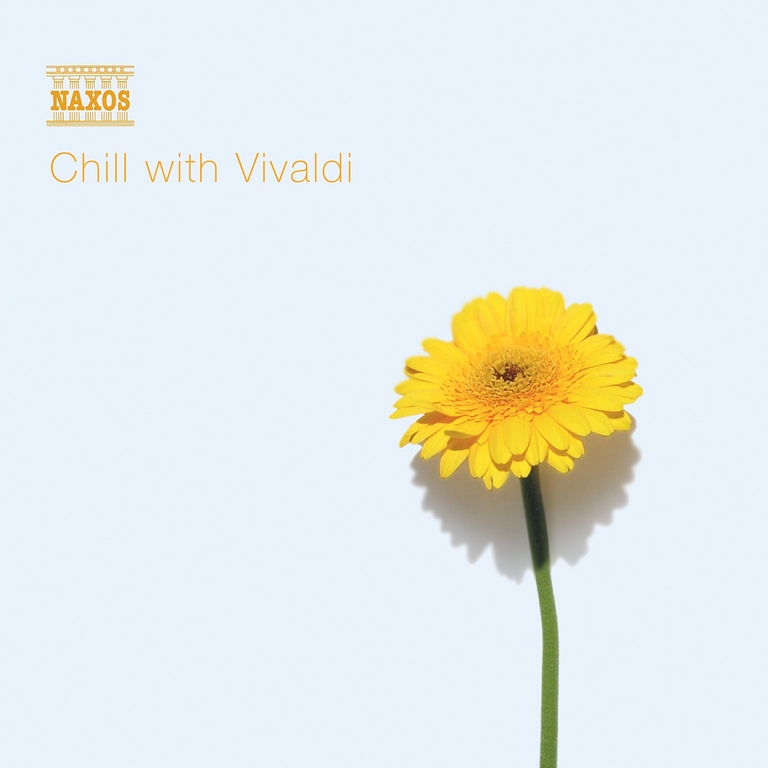
Chill with Vivaldi


Naxos' Chill with Vivaldi presents 15 of the composer's most relaxing compositions, including Concerto for 2 Violins in a Minor: Larghetto E Espirituoso, Concerto in G for 2 Mandolins, Flute Concerto in D Major: Largo and Concerto in D for Guitar. While the album's concept is simple, it features a good sampling from Vivaldi's major works, including the Dresden Concerto and the Four Seasons; it also alternates between large and small-scale compositions, 


all of which give the album an unexpected amount of depth and diversity. Gloria in D: Et in Terra Pax and Guitar Concerto in A: Larghetto are among the other highlights of this collection. It may not be the only Vivaldi collection you'll ever need, but Chill with Vivaldi is still a pleasant and soothing one to have around.
Older Post ►
eXTReMe Tracker
 

Copyright 2011 CLASSIC JAZZ is proudly powered by blogger.com